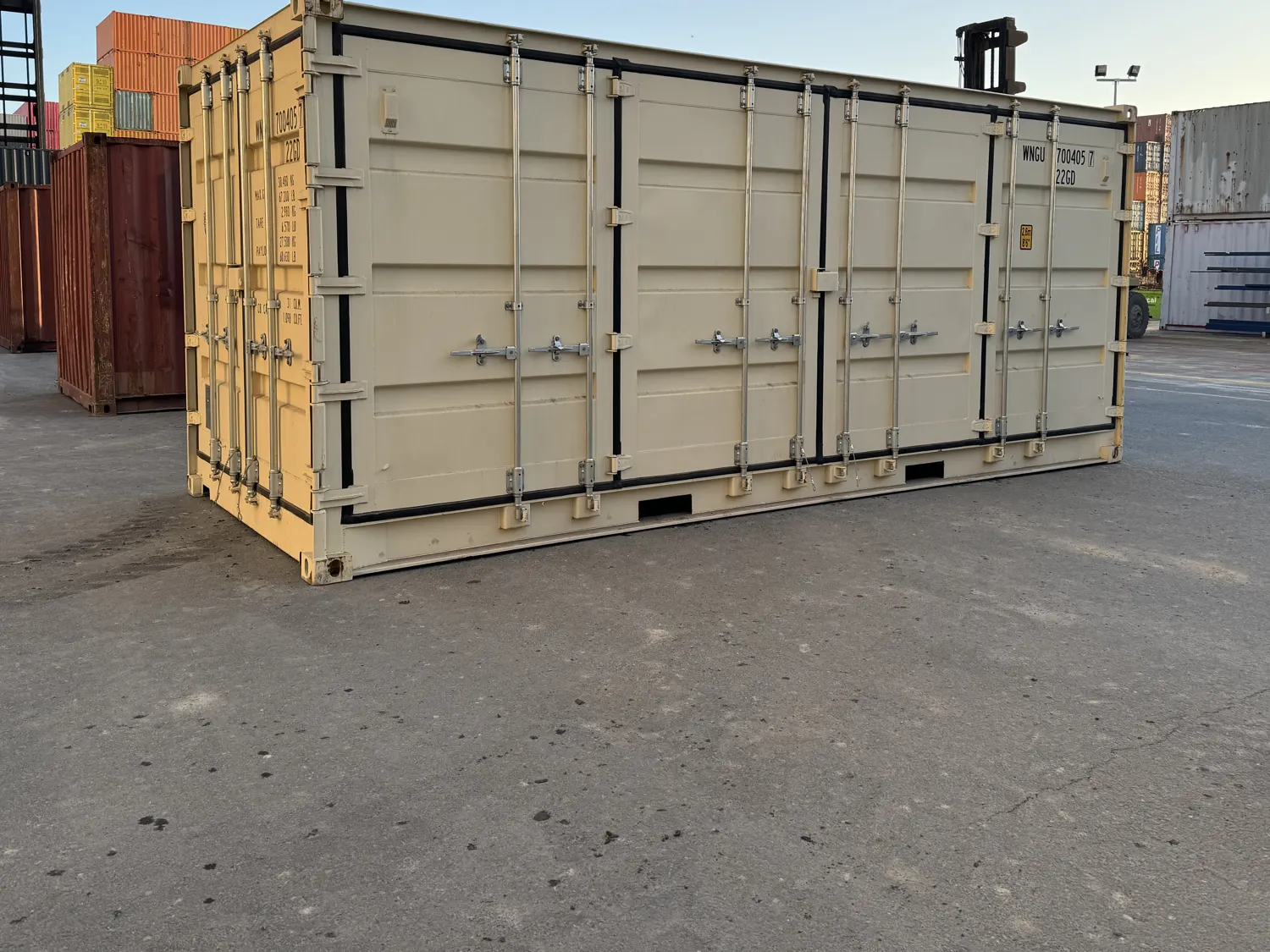
Fitting a container on a Zuccoli-sized block
Estate lots in Palmerston's newer suburbs often leave a side setback only just wide enough for a trailer. A 20ft container is roughly six metres by 2.4 metres, and it needs extra room at one end for the doors to swing right back. Walk the route the truck would take — crossover, verge, gate, side yard — and look up for power lines, eaves and shade sails. On many of these blocks a 10ft is the realistic answer, even though it's usually dearer than a 20ft because it's a cut-down unit.
Plenty of estates carry design covenants on sheds and structures visible from the street, and the City of Palmerston has its own rules on where a container can sit and for how long. Check both before you pick a spot rather than after the truck has gone.
The build-up: what happens inside a closed box
From around October the humidity climbs, and it stays high right through the wet. Air that humid carries a lot of water. Shut it inside a steel box, let the roof cool a little overnight, and the moisture beads on the ceiling and drips. Baby gear, spare bedding, school books, Christmas decorations and paperwork are exactly the household things that suffer — they mark, smell musty and grow spots.
Treat the container like a cupboard that needs to breathe. Vents at both ends let air cross through. Pallets under everything keep boxes off the floor, where condensation tends to collect. Clothing and documents are safest in lidded plastic tubs with a silica sachet inside, and a few moisture absorbers hung from the lashing rings need swapping more often than you'd think during the wet.
Downpipes, drainage and fast-growing grass
Look at where your house roof sheds its water before you settle on a spot. A downpipe or overflowing gutter discharging beside the container will hammer one wall and soak the ground under the corners every storm. Move the container or redirect the water. The base should sit on firm, level pads, a little above the surrounding ground, with the soil falling away from the door end.
In the wet, grass and weeds shoot up fast. Keep a mown strip around the container so air can move under and around it, the base stays drier, and you can see the bottom rails to spot any rust early. It also stops the gap under the floor becoming a hideout for whatever wildlife fancies the shade.
Moving between houses, postings and rosters
With Robertson Barracks just up the road and plenty of households working away on rosters, Palmerston sees a lot of people between homes. A container on the driveway means furniture stays with you rather than in a storage unit across town. For that job, buy a cargo-worthy used container or a new single-trip one — the grades we sell as wind and watertight. As-is units aren't sold watertight, so they're not the choice for a lounge suite or mattresses.
Load on a dry day, put heavy items low and to the front, and keep a walkway so you can reach things later. Our packing guide goes through it step by step.
Home businesses and trades
Tradies and small operators around Yarrawonga's light industrial strip and home-based businesses across the suburbs use containers for tools, stock and equipment. Top End sun heats a dark container quickly, so a lighter colour and some shade make it far more pleasant to work in. If you'll spend time inside, a high cube gives an extra 30cm of headroom. Fuel, gas and chemicals don't belong in a general-purpose box — a dangerous goods container is built for that.
Storms, tie-downs and low ground
Palmerston sits in a cyclone region, and whether a container needs tie-downs depends on its size, where it sits and how long it stays. That's a question for the City of Palmerston and a building certifier or engineer, not for us — we won't promise how any container behaves in a storm.
Keep it off the lowest part of the block, too. A container keeps rain out from above, but if water rises around it, it gets in at the door seals, and an empty container can float.
Delivery to Palmerston
Most 10ft and 20ft deliveries come on a tilt-tray, which needs firm ground, a fairly straight approach and clear space overhead. Narrow estate streets lined with parked cars can make a side-loader or crane truck the better choice, and a 40ft needs a lot of room. We quote delivery with the container and confirm the date once you've ordered.